A Prayer App Designed for Muslim Women: Why Haid Mode Matters
Every month, millions of Muslim women open their prayer tracker and watch it quietly accuse them: streak broken, prayers "missed", progress reset. But a woman on her period isn't missing prayers — she's excused from them by Allah's own command. Hayya was built to understand the difference.
The fiqh is clear, and the app follows it
By scholarly consensus, a menstruating woman does not pray, and she does not make up those prayers afterwards (missed fasts are made up; prayers are not). 'Aishah said, "We were ordered to complete the fasts, but were not ordered to complete the prayers" (Sahih Muslim 335; see also Sahih al-Bukhari 321). This is mercy built directly into the religion. Yet a streak counter that doesn't know about haid treats those days like failure: red marks, broken streaks, guilt notifications. The app punishes what Allah excused.
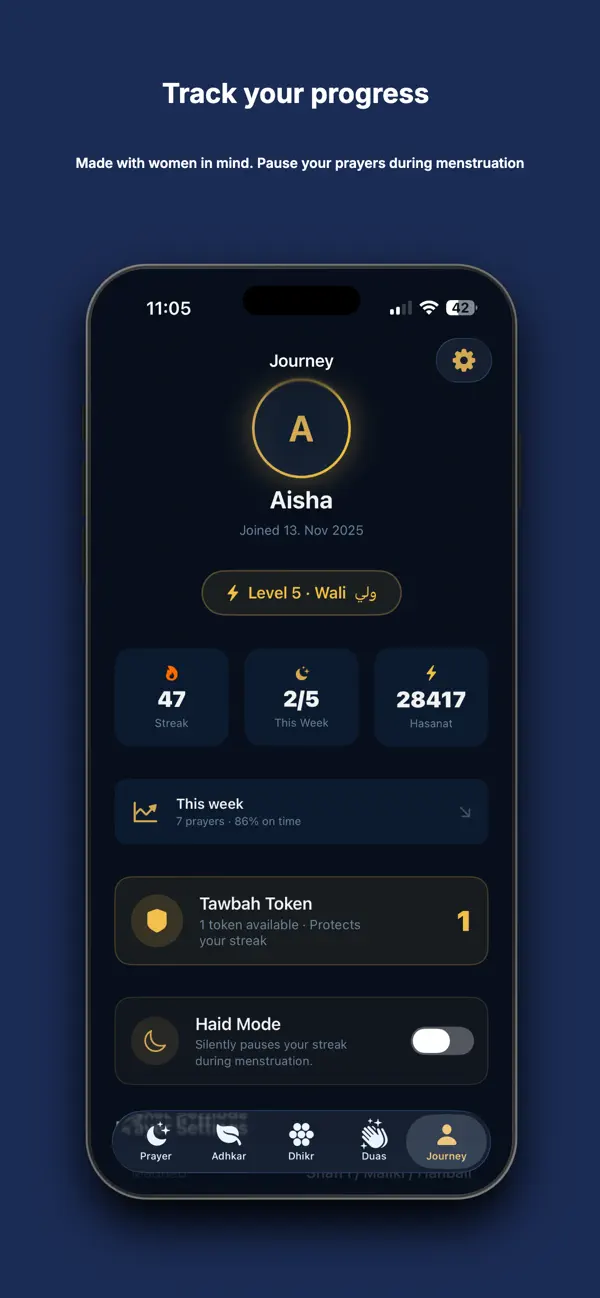
What Haid Mode does
- One quiet toggle. Turn on Haid Mode and your Salah Nur streak pauses — it doesn't break, doesn't reset, and resumes exactly where it left off.
- No penalty, no judgment. Nothing is marked "missed". No red badges. No guilt-scented notifications.
- No awkward labels. The toggle is discreet and neutral — designed so the app never makes you explain yourself.
- Nothing locks, nothing nags. Salah Lock stays off while Haid Mode is on, and the Fajr alarm pauses too, unless you choose to keep it for suhoor or dhikr.
- Completely private. Like everything in Hayya, this stays on your device. No cloud, no data brokers, and it is never part of the optional usage analytics — a particularly serious concern given that period-tracking and prayer apps alike have sold user data.
What stays open during your period
Being excused from salah doesn't disconnect you from worship. In Hayya, everything else keeps going:
- Dhikr & duas: the tasbih counter and the full dua library remain — many women make these days their dhikr days.
- Adhkar streak: morning and evening adhkar have their own separate streak you can keep building.
- Quran: listen to any of the five reciters. Whether you may recite from memory or read from a screen during haid is a difference of opinion between the schools: the Hanafi, Shafi'i and Hanbali schools hold that you should not recite (Darul Iftaa Jordan), while Imam Malik, and later Ibn Taymiyyah, permitted it (IslamQA 2564). Ask a scholar you trust about your madhab's view.
- Learning: the Learn to Pray guide and lessons stay open.
Designed with women in mind from the start
Haid Mode exists because Hayya was designed with women in mind from the first sketch, not patched later. It's free, it's off until you turn it on, it pauses your streak instead of breaking it, and it never leaves your phone. If you've quit a prayer app because it made your month harder instead of easier — this one was built for you.
Sources
- Sahih Muslim 335: fasts missed during menstruation are made up, prayers are not
- Sahih al-Bukhari 321: the Prophet ﷺ never ordered prayers missed during menses to be made up
- Darul Iftaa Jordan (Shafi'i), "A menstruating woman is prohibited to recite Quran even from memory": the Hanafi, Shafi'i and Hanbali view
- IslamQA 2564, "Can you read the Quran during your period?": the view of Malik and Ibn Taymiyyah
Written by Louis, founder of Hayya. This is a summary of the cited sources, not a fatwa. Ask a scholar you trust about your madhab's ruling.

A streak that understands your fiqh
Haid Mode is free, private and judgment-free. No ads, no tracking, ever.
Download Hayya FreeFAQ
Do I make up the prayers afterwards?
No — prayers missed during menstruation are not made up, by consensus. Missed Ramadan fasts are (Sahih Muslim 335). Track makeup fasts here →
Is my cycle data shared anywhere?
No. Haid Mode is a local toggle on your device. Hayya has no accounts, and Haid Mode never leaves your phone, not even in the optional usage analytics.
Does Haid Mode affect Hasanat or my rank?
Your rank and Hasanat are preserved — the app simply pauses expectations until you're back.